The brain learns safety through experience, not insight.
The CARE Framework™ puts that truth to work in two levels. For directors and administrators. Environments shape behavior, and leadership shapes the environment. Four practices — Calm Leadership, Aligned Systems, Repair Over Blame, and Emotional Empowerment — help you build a program that feels calm, consistent, and safe. Teachers and caregivers learn that children borrow regulation from calm, predictable adults. Four practices — Co-Regulation, Attunement, Repetition & Repair, and Emotional Safety — turn everyday moments into experiences of safety.
WHY THIS FRAMEWORK
The CARE Framework contributes to early childhood development by providing a practice-focused, integrative model that supports practitioner decision-making in infant-toddler caregiving settings. Although existing frameworks emphasize responsive, relationship-based, and developmentally appropriate care, few explain how caregivers make real-time decisions during emotionally complex interactions with toddlers. CARE addresses this gap by integrating developmental theory, attachment-informed practice, and reflective caregiving into a unified framework. It helps caregivers interpret toddler behavior as communication and respond intentionally. By centering caregiver cognition rather than prescribing strategies, CARE shows how theory can be applied in authentic caregiving contexts and offers a scalable framework for professional learning and leadership practice (Bowlby, 1969; NAEYC, 2020; Schön, 1983).
WHY THIS MATTERS
Toddler behavior is frequently misunderstood as misbehavior rather than communication.
Caregivers often rely on fragmented strategies or compliance-based approaches.
Existing models emphasize what to do, but not how caregivers think in the moment.
Toddler caregiving requires frameworks that support interpretation, reflection, and intentional response.
Caregivers in childcare centers lack access to affordable education, limiting the number of caregivers who deeply understand developmental ages and stages, brain development, and the significance of their role in the developmental process.
The problem isn’t caregiver willingness— it is the lack of a unified, practice-ready decision-making framework.
EXPLORE OUR SIGNATURE TRAININGS
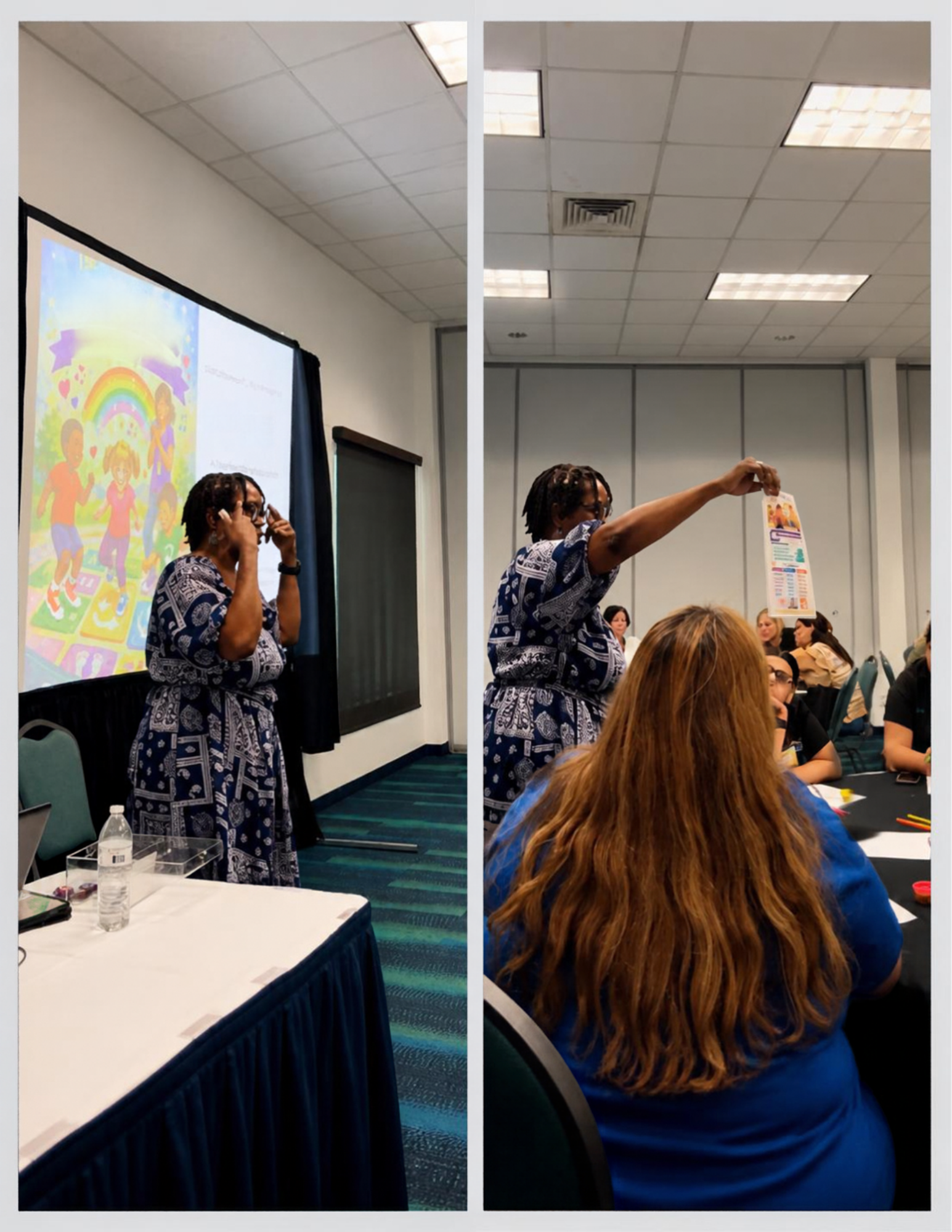
Signature trainings are designed specifically for center directors and practitioners to foster healthy social-emotional relationships and development.
-
A deeply human introduction to trauma-informed practice, blending neuroscience, behavior decoding, attachment, and classroom-ready CARE strategies. Educators walk away understanding the "why" behind behaviors and the "how" for creating emotionally safe classrooms.
-
A leadership-focused training that supports administrators in coaching staff, navigating difficult moments, reducing burnout, and creating emotionally safe center culture. Includes scripts, coaching frameworks, and leadership routines.
-
A powerful training that helps educators build trust with parents using trauma-informed communication, attunement, and predictable partnership routines.
-
A toddler-specific behavior and emotional development training focusing on big emotions, sensory needs, brain development, and rational guidance.
Which component fits your program?
Tell me what is happening in your program, and we will work out the next step together.